When the COVID-19 pandemic reached Myanmar in March 2020, the Ayeyarwady Foundation immediately activated its Health and Disaster Management pillars to support the national response, under the leadership of Chairman U Zaw Zaw. Collaborating with the Ministry of Health and Sports (MOHS), United Nations Office for Project Services (UNOPS), World Health Organization (WHO), and partners like AYA Bank and Max Myanmar Group, the Foundation’s efforts evolved from early prevention to large-scale treatment and community aid. These initiatives, spanning 2020–2022, followed a clear timeline: starting with quarantine and protective measures during the initial wave, scaling up to the establishment of flagship treatment centers amid the second wave, and extending to vaccine support and vulnerable group assistance.
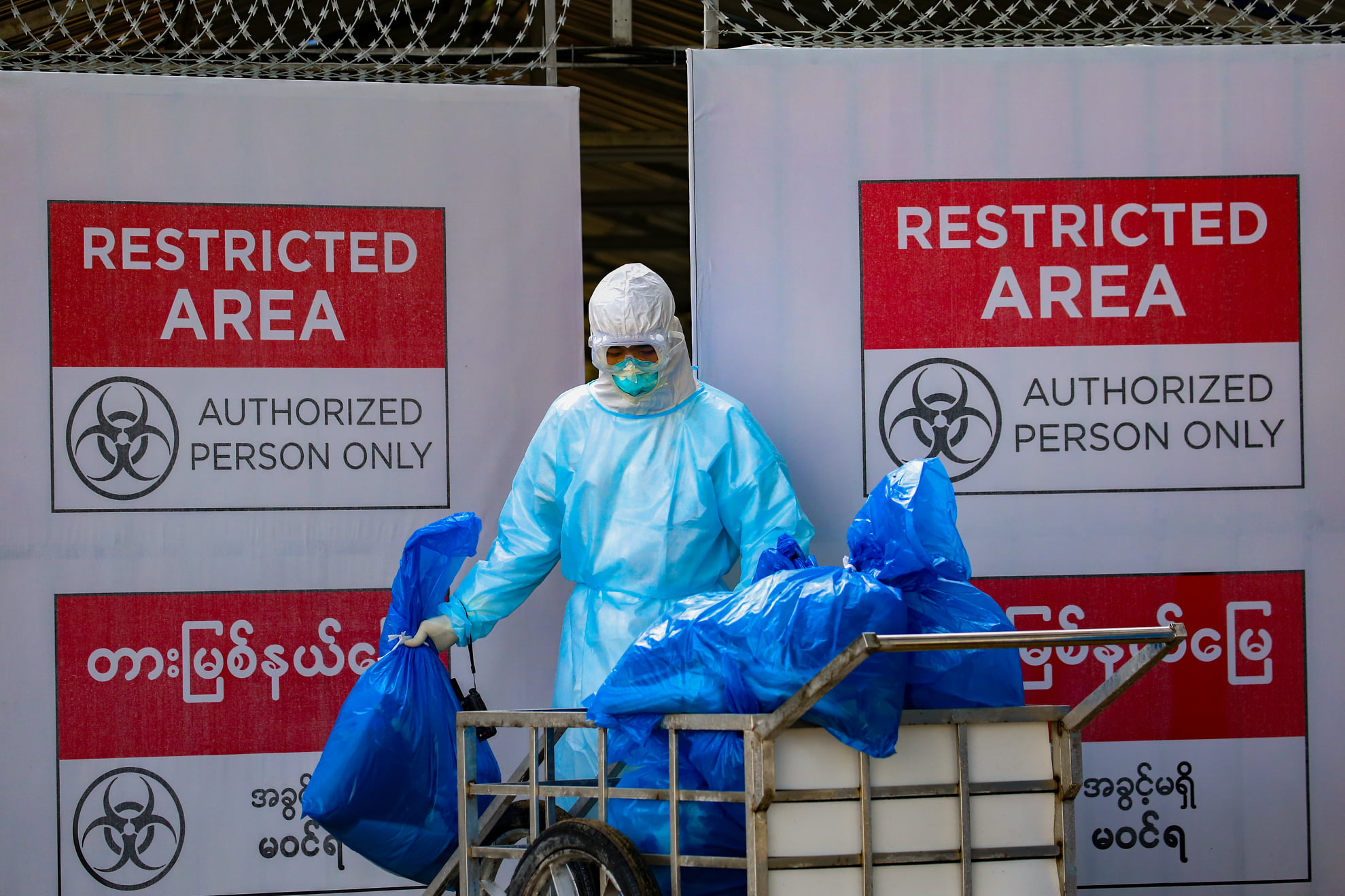
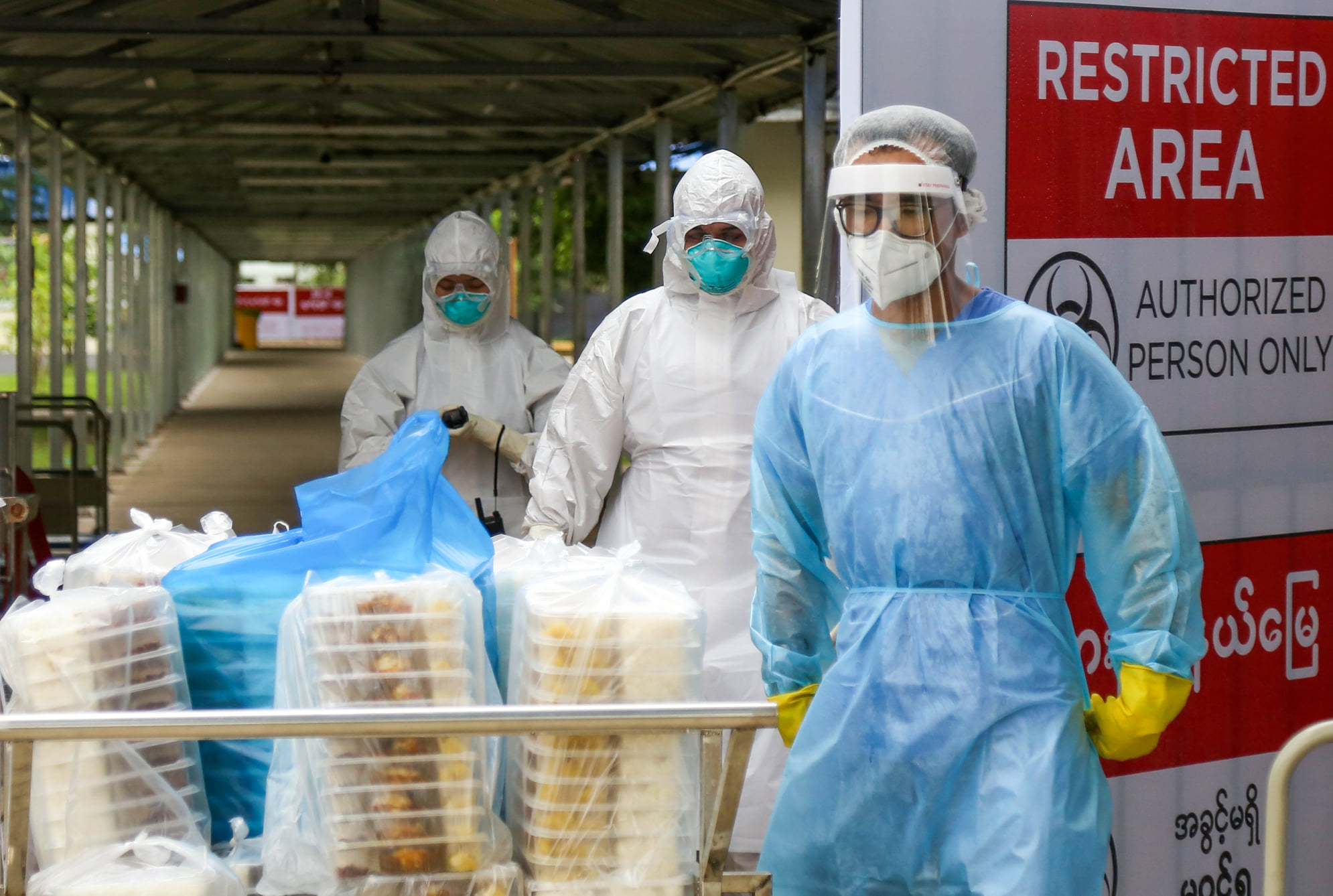
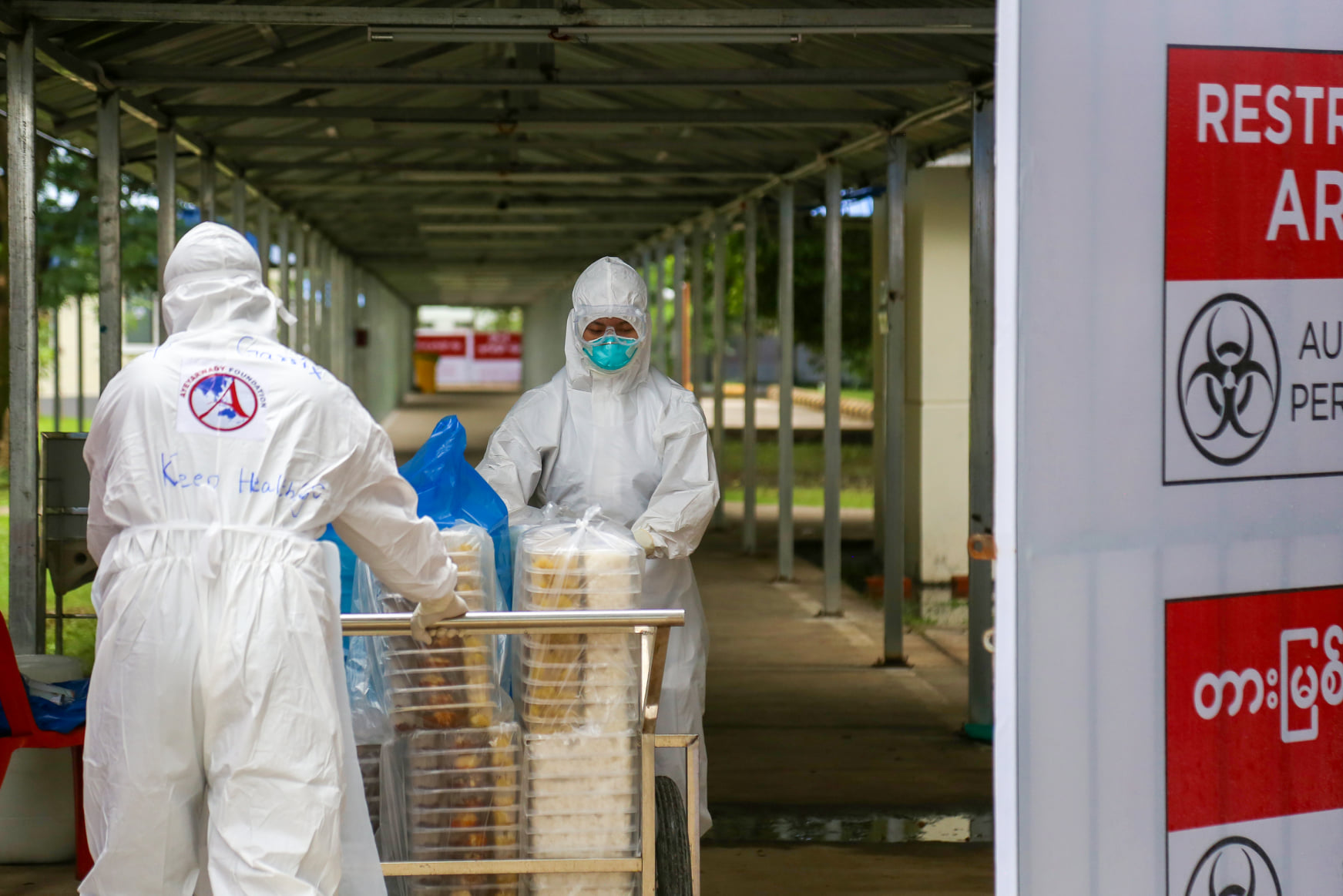
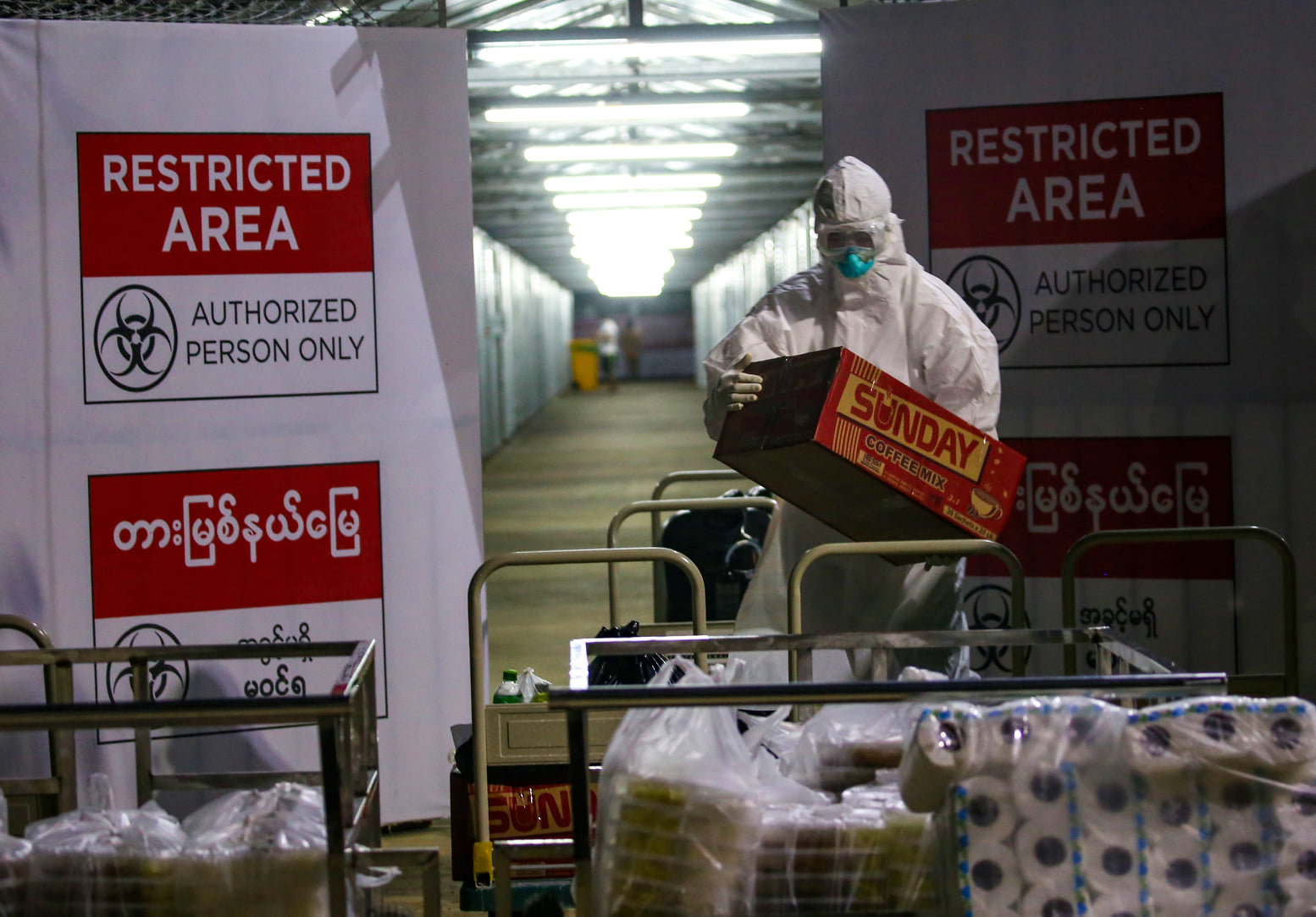
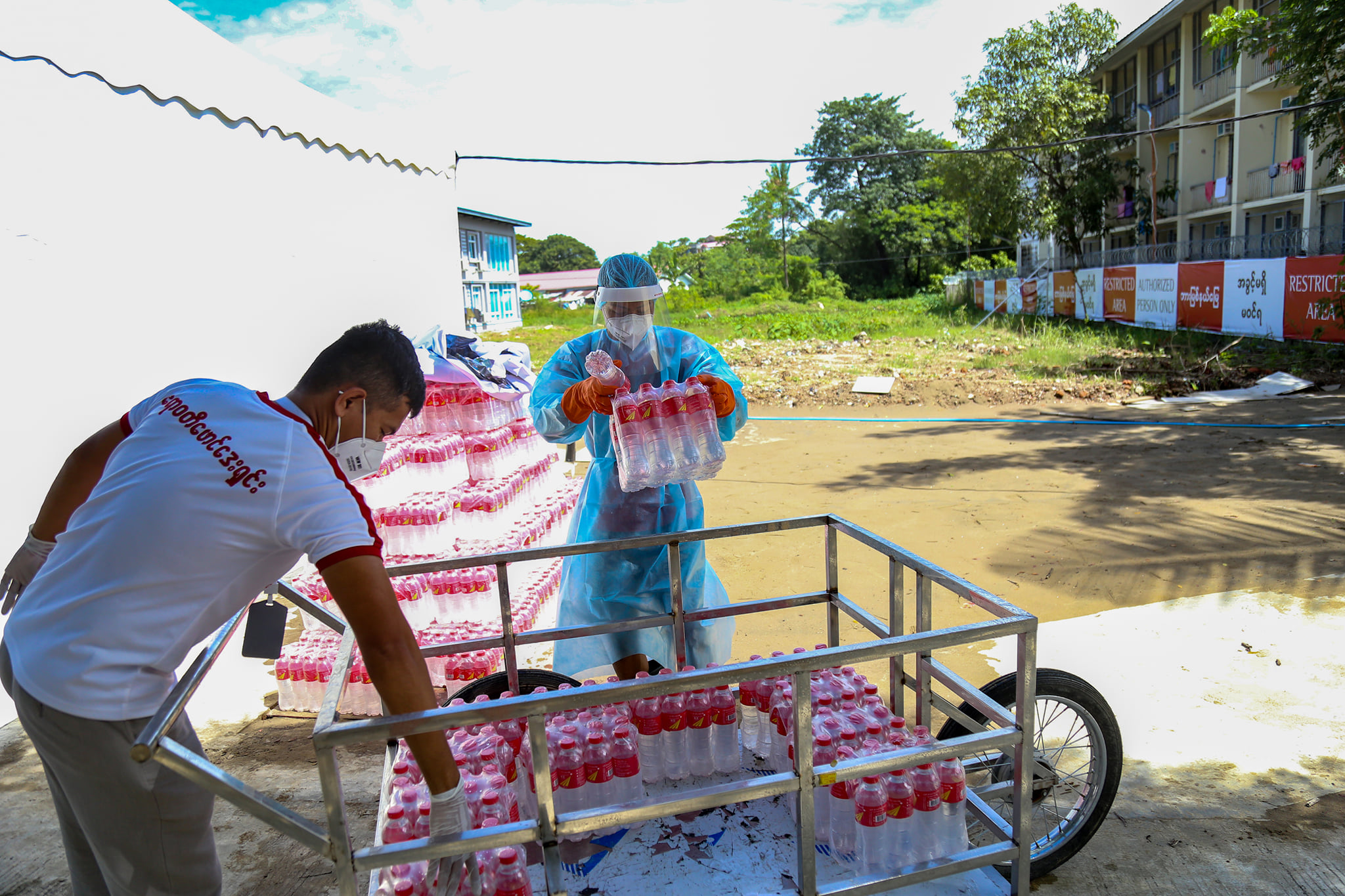
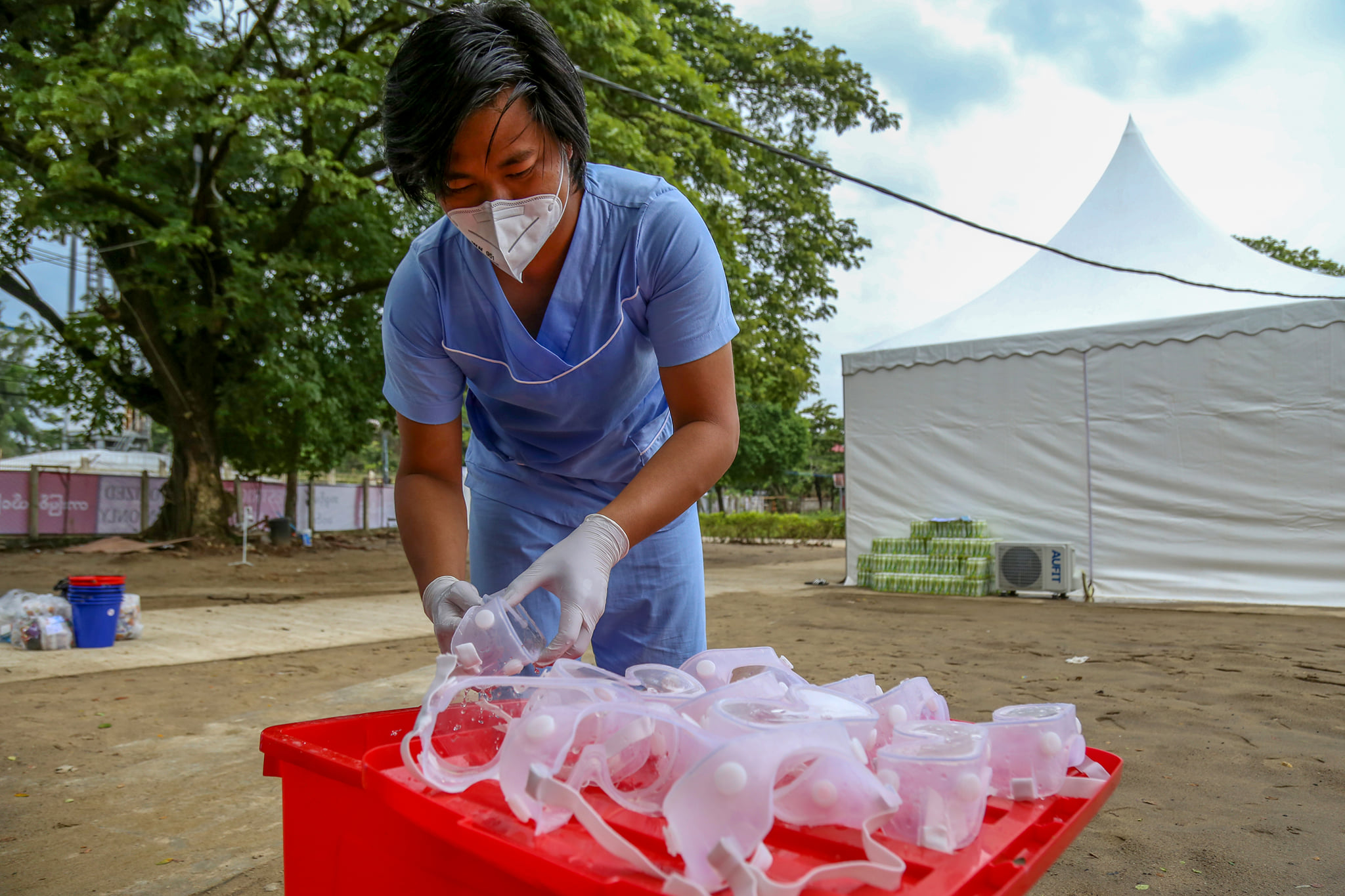
The total contributions to Myanmar’s fight against COVID-19 amounted to MMK 24.34 billion, with the Ayeyarwady Foundation providing MMK 17.6 billion and external donors contributing MMK 7.28 billion. This comprehensive response treated over 12,000 patients, provided 22,000+ free tests, and reached thousands more through supplies and aid, demonstrating the Foundation’s commitment to public health resilience.
Early Response: Quarantine Camps, Protective Items, and Initial Donations (March–September 2020)As Myanmar confirmed its first COVID-19 case on March 23, 2020, the Ayeyarwady Foundation focused on containment and frontline support, converting facilities into quarantine sites and donating essential items to prevent spread during the initial wave.
These early efforts, totaling over MMK 8.3 billion by mid-2020 (including rice donations), laid the groundwork for containment, protecting healthcare workers and vulnerable populations during the first wave.Escalated Response: Establishment of Ayeyarwady Centers and Expanded Community Aid (September 2020–2022)As the second wave surged in September 2020, with daily cases rising dramatically, the Foundation shifted to building major treatment infrastructure while intensifying aid to hospitals, orphans, and the elderly. This phase marked the peak of operations, with rapid construction and nationwide distributions.
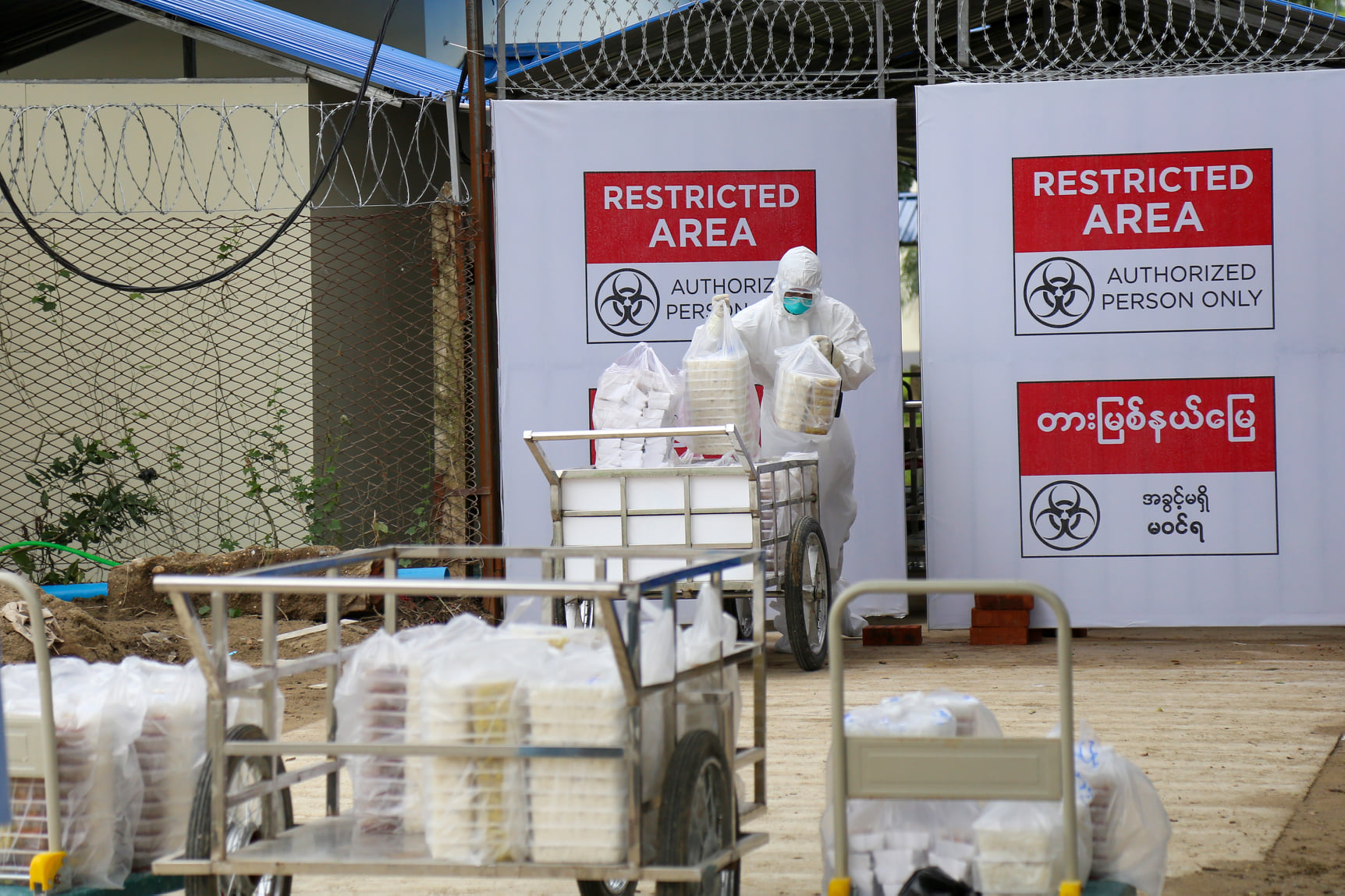
In September 2020, the Foundation converted Thuwunna Youth Training Center’s artificial turf football stadium in Thingangyun Township into a 1,000-bed (later expanded to 950-bed with Centers A, B, and C) Treatment/Quarantine Center, completed in just seven days for the core facility under MOHS guidance. Equipped with 200 HDU/ICU beds, laboratories, Test & Care units, a 20-ton liquid oxygen plant, oxygen generators, 1,250 patient beds, monitors, air-conditioning, and tents, it treated over 12,000 mild/asymptomatic/moderate cases and provided 22,000+ free tests. The Foundation covered logistics, daily meals, staff accommodations (100 medical professionals and volunteers), and non-clinical operations, with an initial USD 1 million (approximately MMK 1.3 billion) donation in September 2020, escalating to USD 7 million (MMK 9 billion) cumulative by October 2020, including USD 2 million (MMK 2.6 billion) for equipment imports.
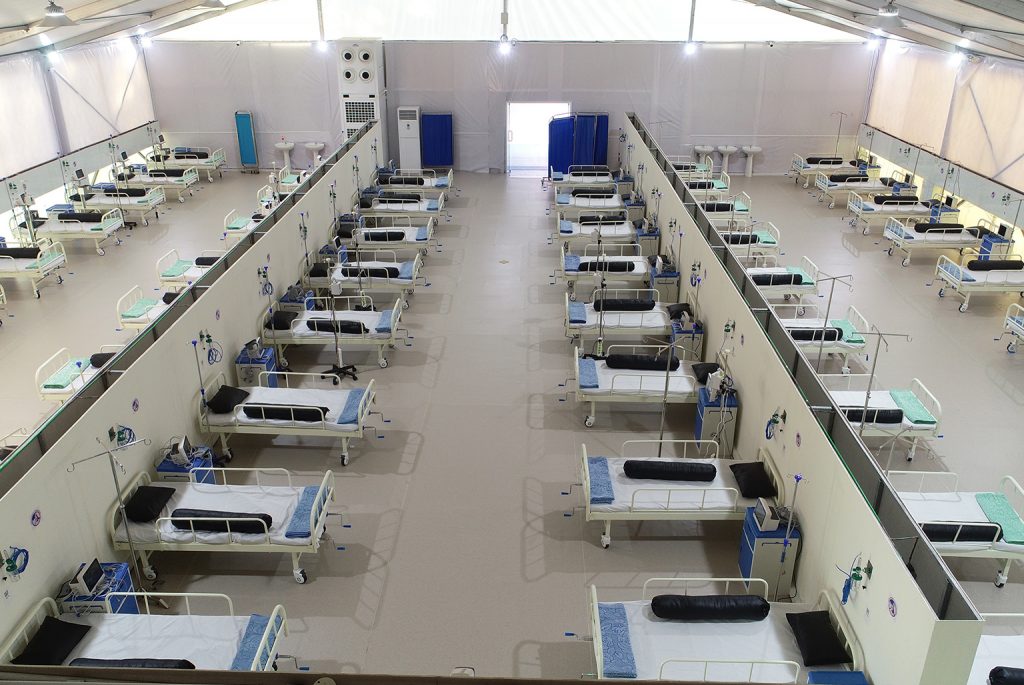
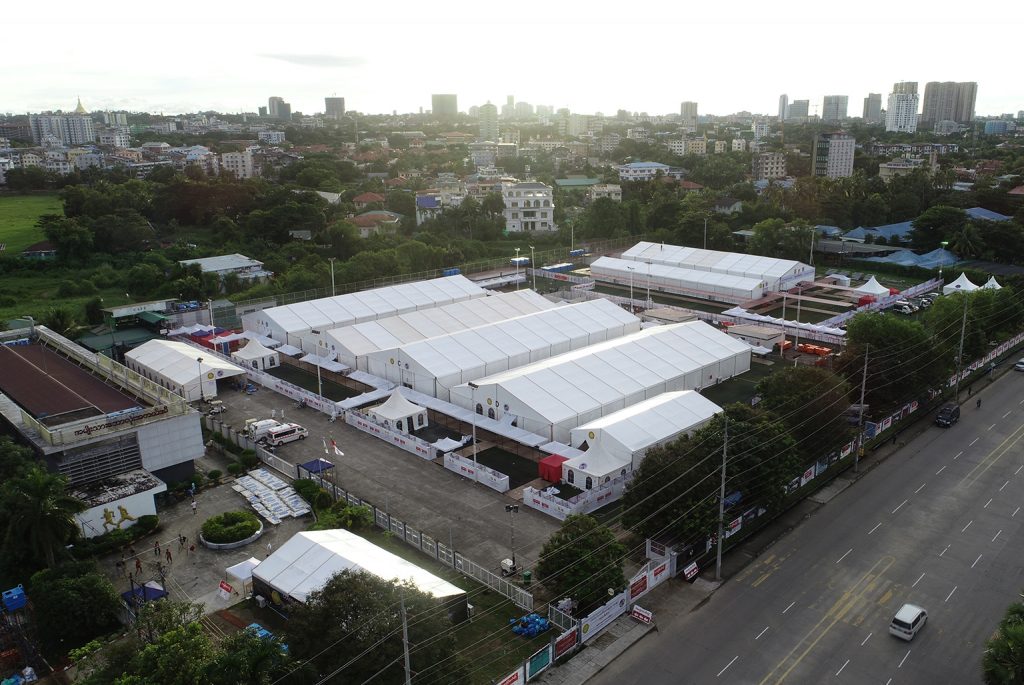
Paralleling Yangon, the Foundation established a 375-bed Treatment Center at Mandalar Thiri Multi-Purpose Stadium in late 2020, with HDU/ICU units, labs, Test & Care facilities, and oxygen systems. It began testing on December 22, 2020, treating hundreds during regional outbreaks and providing free meals and care. Funded via the same USD 2 million equipment package (MMK 2.6 billion) in October 2020, integrated into the overall center investments.
Cash, Food, and Aid for Social Communities and Vulnerable Groups: Expanded support for those impacted by lockdowns, including MMK 1–1.2 million cash plus rice, food, and toys to over 71 orphans at facilities like Myo Set Thit Philanthropy School (152 children), Myittar Yin Khwin Orphanage (71 children), and Chan Thar Aung Nunnery (45 children) in June 2020. Additional aid targeted the elderly and broader communities, with ongoing hospital donations (e.g., MMK 20 million to Waibargi) and daily meals for treatment center patients. In 2021, the Foundation contributed MMK 2 billion (USD 1.5 million) for national COVID-19 vaccine procurement, supporting long-term immunity efforts.
This phase, building on the early foundations, amplified the Foundation’s impact through scalable infrastructure and targeted aid, ensuring comprehensive coverage as cases peaked and declined into 2022.
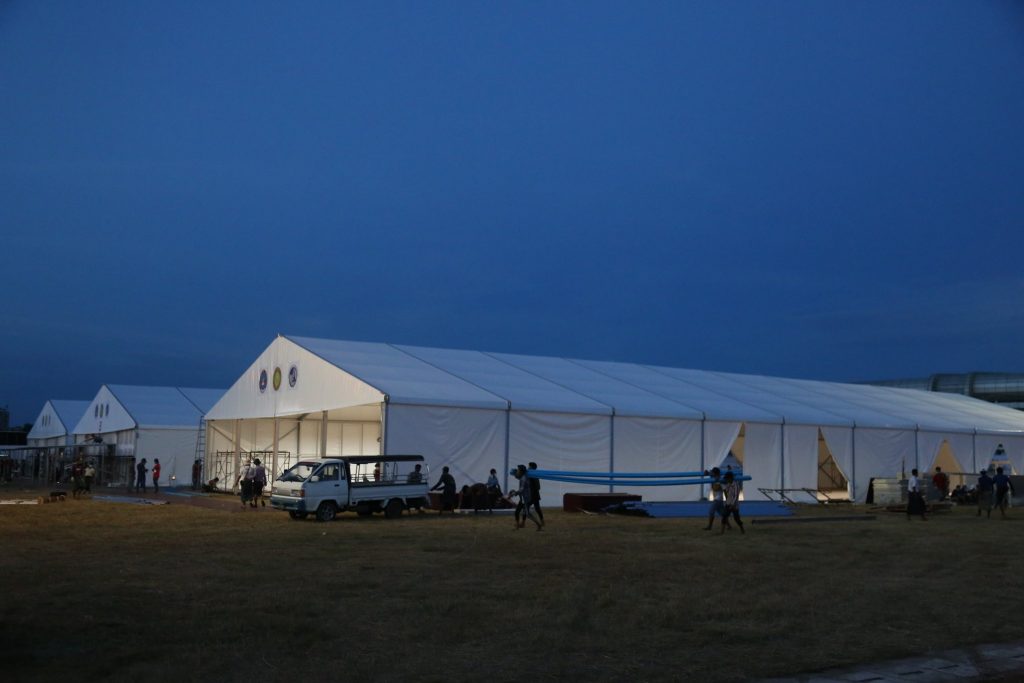
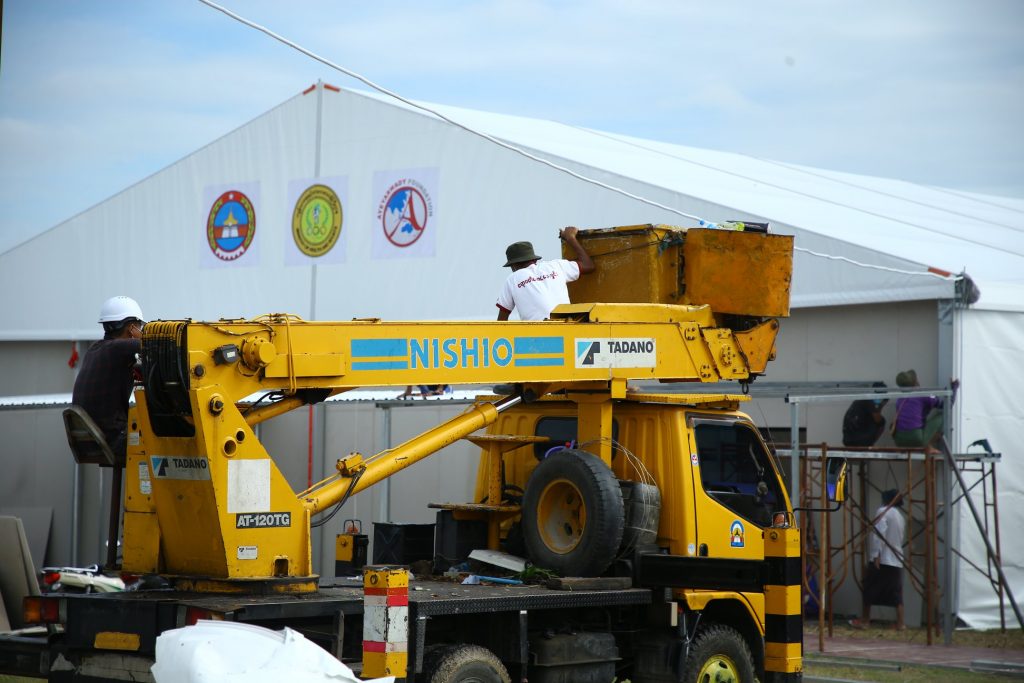
Since care will be provided in a non-traditional environment, it is critical to ensure these facilities can support implementation of recommended infection prevention, treatment and control practices. These Standard Operating Procedures (SOP) are to ensure smooth operation in the quarantine facility and daily monitoring using the reporting format to maintain functional flow and reduce/minimize the interaction between patients and healthcare professionals, as well as support staff so that transmission of disease is prevented.
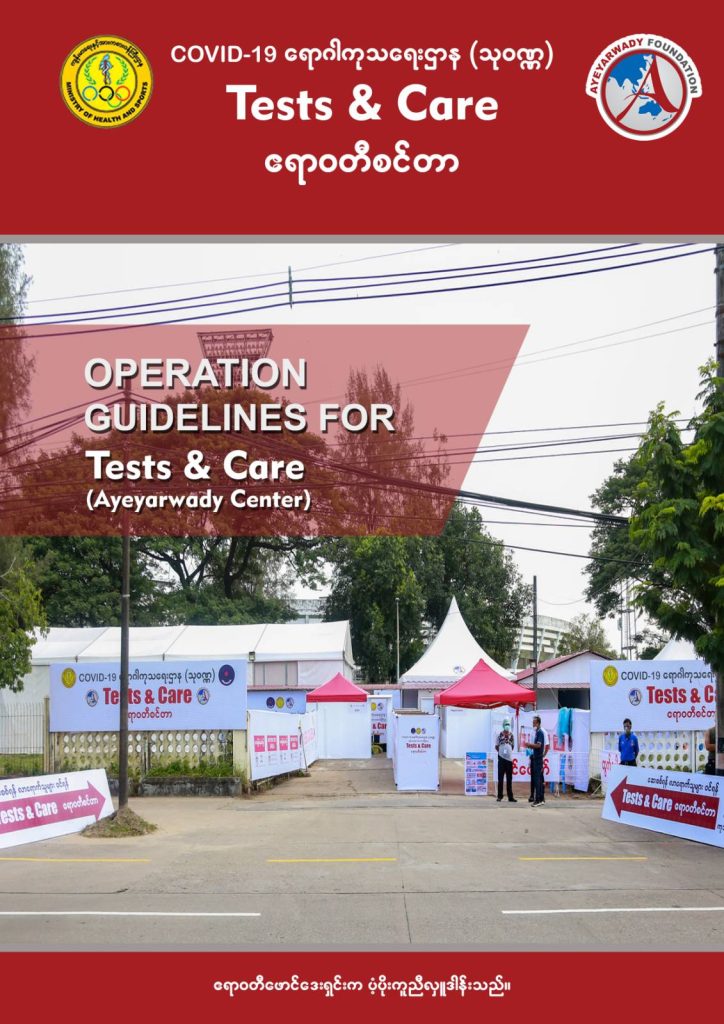
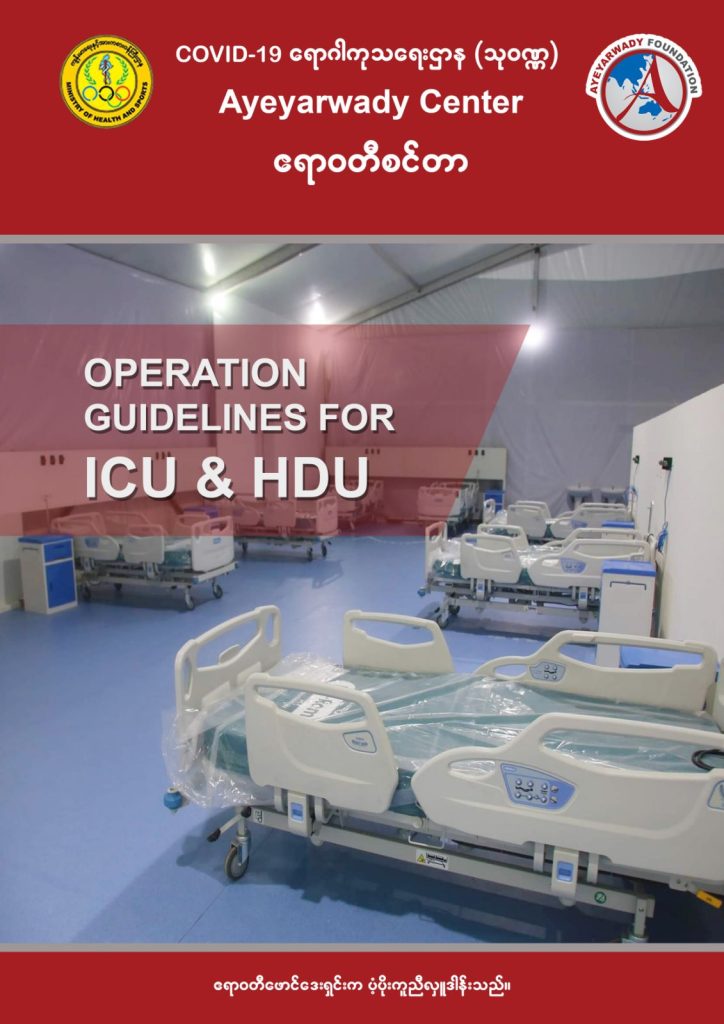
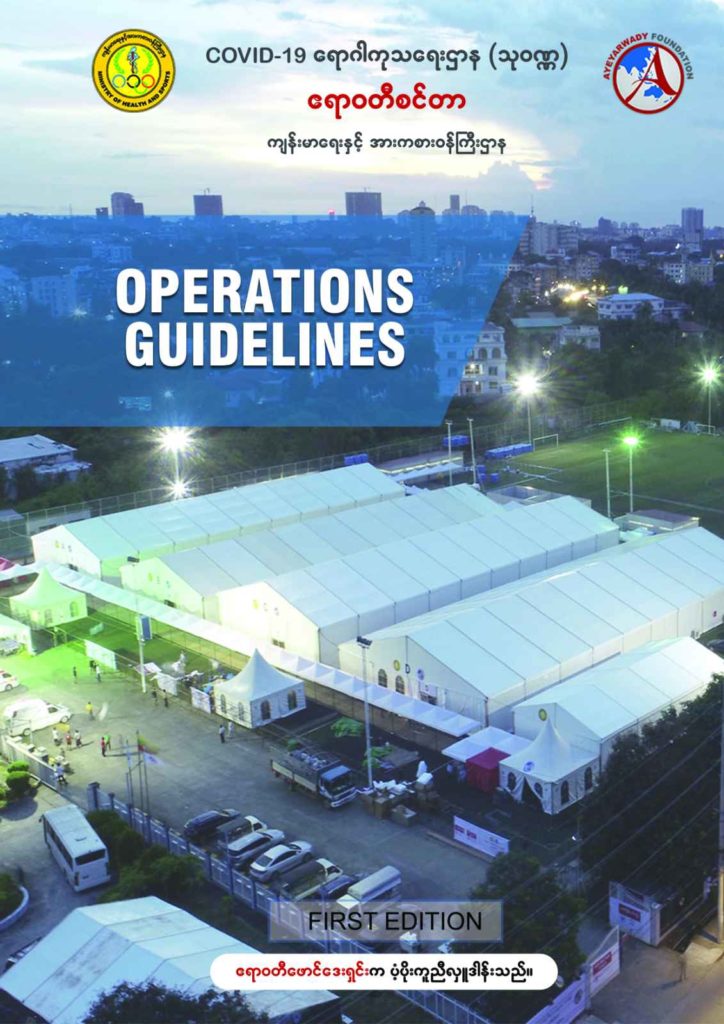
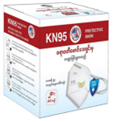
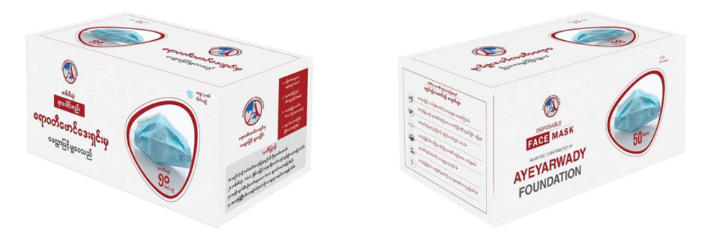
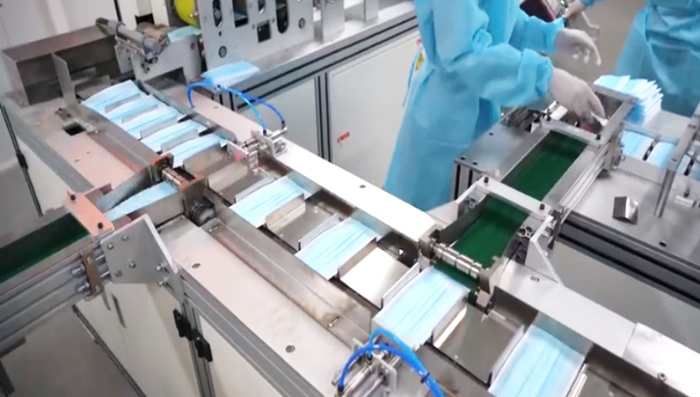
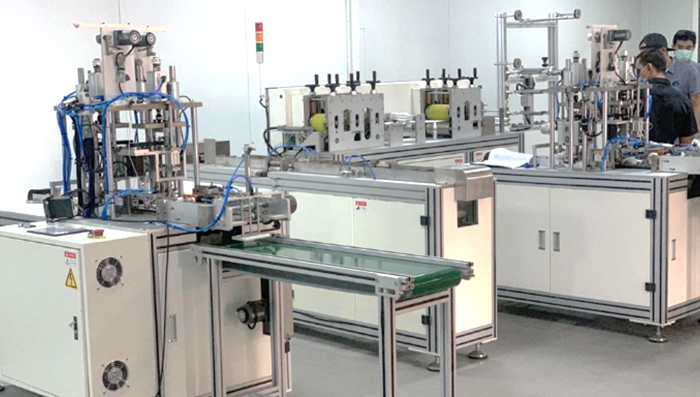
COVID-19 has caused a dramatic shortage in the supply of face mask, which is mainly explained by a surge in demand. Surgical masks and N95 respirators are used to prevent the spread of respiratory infections. Both clinical masks and N95 respirators are disposable, explaining the high and recurrent demand. Looking ahead, it would be excessively costly for every country to develop production capacity that matches crisis demand, global trade restrictions and encompasses the whole value chain. Meeting demand for face masks has become one of the main issues for Myanmar fighting the pandemic. To fulfill the need of Mask Supply in Myanmar to fight against Covid-19, Ayeyarwady Foundation build Mask Production Line with the capacity of 80 masks per minute.
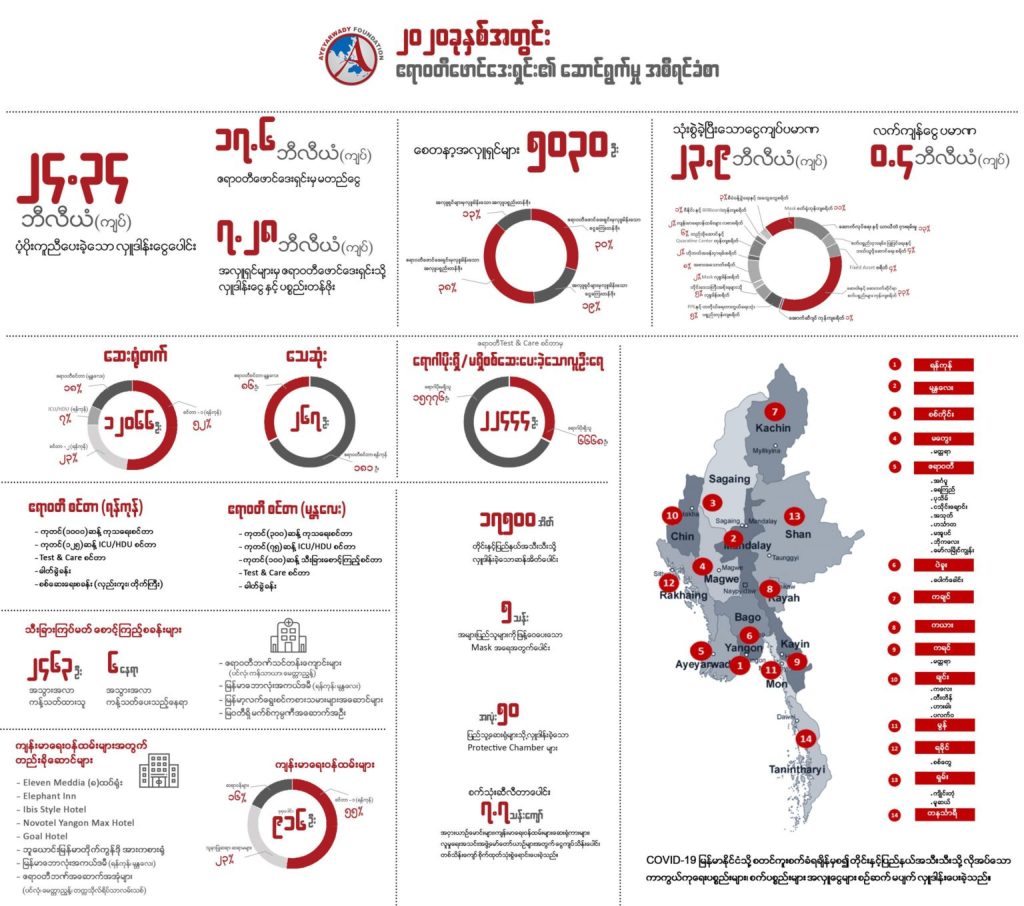
The Ayeyarwady Foundation’s COVID-19 relief efforts represented a significant mobilization of resources, with detailed contributions as follows:
These funds covered everything from quarantine setups and PPE to center construction, equipment, vaccines, and community aid, underscoring the collaborative scale of the response.
The COVID-19 Relief project exemplifies the Ayeyarwady Foundation’s rapid adaptability and dedication to public welfare. By progressing from early quarantine and donations to world-class treatment centers and sustained community support, the Foundation played a vital role in mitigating the pandemic’s effects and fostering recovery across Myanmar.
Copyright 2026 @ Ayeyarwady Foundation | All Rights Reserved